
What functional alignment means
An implant-positioning approach that respects the natural shape of your knee, made reliable by robotic assistance.
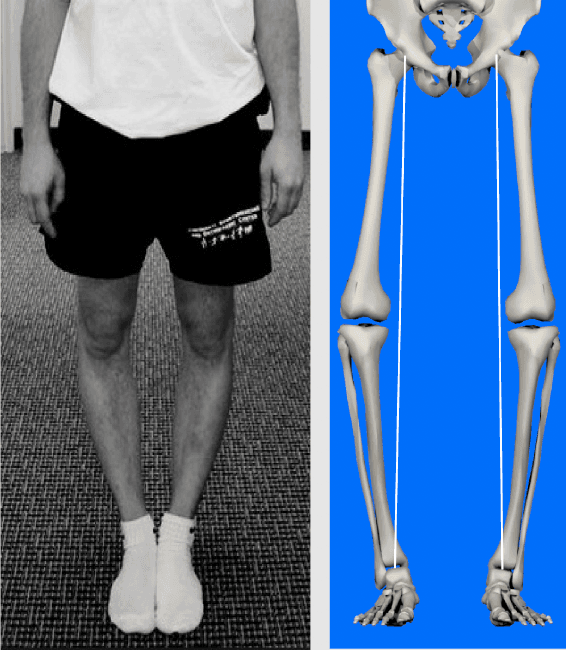
Everybody's knees are different. Two people with similar X-rays can walk, kneel and load the joint in completely different ways, and the small variations in bone shape and ligament tension that nobody notices day to day start to matter a great deal once a surgeon is fitting an implant inside the joint.
Functional alignment is the surgical answer to that. It's an approach to positioning a knee implant that uses your knee's own anatomy and ligament tension as the starting point, then makes small adjustments to balance the joint through its full range of movement, with as little soft-tissue release as possible. Done well, it puts the implant where your knee already wants to be.
What makes the approach reliable, rather than just an idea, is robotic assistance. Dr Jason Tsung uses the Stryker Mako robotic-arm system to plan and deliver functional alignment for total knee replacement.
Why "natural shape" is a real thing
Knee replacement surgeons have debated alignment for decades. Four main schools of thought are worth knowing in plain English.¹,²
- Mechanical alignment aims for a perfectly straight leg from hip to ankle, regardless of how the knee was originally shaped. It has been the default since the 1970s and produces durable implants, though some patients say the knee never quite feels like theirs.
- Kinematic alignment tries to recreate your pre-arthritic anatomy exactly, even when that means leaving the knee a few degrees away from straight.
- Restricted kinematic alignment is a compromise that allows kinematic principles within agreed safety limits.
- Functional alignment is the newest of the four. It uses your own anatomy and ligament tension as the starting point, then makes small adjustments to implant position to balance the knee through its full range, with as little soft-tissue release as possible.
The widely used Coronal Plane Alignment of the Knee (CPAK) classification describes nine natural knee types, based on overall limb alignment and the slope of the joint line.³ Only about one in seven people have the "neutral" type that mechanical alignment was designed around. The rest don't. Their anatomy sits in varus or valgus, or carries the joint line at an angle most standard implants ignore. That natural shape is what functional alignment respects, instead of forcing the knee to a textbook average.
How Mako makes it reliable
The Mako system turns the approach into a workflow that can be repeated reliably from one patient to the next.⁴
- Plan. A CT scan taken a week or two before surgery becomes a 3D model of your knee. Implant size, position and angle are mapped onto that model.
- Check and balance. In theatre, the surgeon matches the bone to the plan and checks ligament tension through bending and straightening. If the gaps are uneven, the plan is adjusted before any bone is cut.
- Prepare the bone. A boundary set in the plan keeps the saw inside the intended zone. The robot doesn't move on its own. It limits where the surgeon can go.
- Reassess. Trial components go in, balance is checked again, and final adjustments are made if needed.
The point is that the plan isn't fixed when you arrive in theatre. It's refined live, against your actual ligaments. A 2025 study found robotic functional alignment reached the planned coronal alignment within 2.6 degrees, compared with 4.5 degrees using conventional instruments.⁵
What the evidence shows
Functional alignment evidence has matured quickly in the last two years.
The 2025 John N. Insall Award randomised controlled trial compared 121 mechanical-alignment knee replacements with 123 functional-alignment robotic knee replacements.⁶ At two years, overall patient-reported scores were similar between the groups, but the functional alignment group needed far fewer soft-tissue releases (16% versus 65%), and 94% said they would recommend the procedure, compared with 82% in the mechanical alignment group.
Other 2025 studies point the same way. A separate randomised trial, in which the same patient had mechanical alignment on one knee and functional alignment on the other, reported better short-term function with functional alignment.⁷ A gait-analysis study found functional alignment restored natural walking patterns more consistently than mechanical alignment.⁸
The long-term picture is still being written. Australian registry data show that around 95% of primary knee replacements are still working at ten years, across alignment techniques.⁹ Whether functional alignment improves those long-term numbers, or leaves them roughly where they are, is a question the registries will answer over the coming decade.
Where it fits in Dr Tsung's practice
Dr Tsung uses functional alignment as his default approach in first-time knee replacement, delivered with the Mako system; more on robotic knee replacement. The CT plan is reviewed before every operation, soft-tissue balance is checked during surgery, and the implant position is adjusted on the day to suit each knee.
Functional alignment isn't suitable for everyone. Severe deformity, significant bone loss, or previous fractures around the knee may mean a more conventional alignment is the safer choice for a stable, durable result. Robotic assistance and functional alignment are tools, not guarantees. As with any knee replacement, there are real risks, among them infection, blood clots, stiffness, and the small chance of revision surgery, and these are discussed in detail at your consultation.
Surgery is also one option among several. First-line management for knee arthritis is physiotherapy, weight management, and pain relief, with surgery considered when those stop giving enough relief. More on hip and knee arthritis management.
Common questions
Is functional alignment the same as robotic surgery?
No. Robotic systems like Mako are the platform. Functional alignment is one of several approaches a surgeon can choose to deliver on that platform. Mako can also deliver a mechanical or kinematic plan.
Will my knee feel more natural with functional alignment?
Recent randomised data show fewer soft-tissue releases and a higher willingness to recommend the surgery with functional alignment.⁶ Individual results vary.
Does functional alignment make the implant last longer?
We don’t know yet. Long-term data is still maturing. Australian registry survivorship for primary knee replacement sits at around 95% at ten years across techniques.⁹
Do I need an extra scan?
Yes. Mako planning uses a low-dose CT of the leg, taken a week or two before surgery. It’s quick and done as an outpatient.
How long is recovery?
Recovery is broadly similar across alignment techniques. Most people are moving on the day of surgery and walking with a stick at two to three weeks, with fuller activity over three to six months.
Speak to Dr Tsung
To discuss your knee, you'll need a referral from your GP or another specialist. Call reception on (07) 5676 9930 to book your first appointment, or email hello@sgco.au. New patients can pre-register online before the visit; the form prepares your records and does not book an appointment. More on knee replacement and robotic-assisted joint replacement.
References
- Rivière C, et al. Alignment options for total knee arthroplasty: a systematic review. 2017.
- Lustig S, et al. Personalised alignment in total knee arthroplasty. 2021.
- MacDessi SJ, et al. Coronal Plane Alignment of the Knee (CPAK) classification. Bone & Joint Open. 2021.
- Khlopas A, et al. The Mako robotic-arm knee arthroplasty system. Archives of Orthopaedic and Trauma Surgery. 2021.
- Sava M, et al. Improved accuracy of functional alignment restoration with robotic-assisted total knee arthroplasty. Die Orthopädie. 2025.
- Young SW, Tay ML, et al. The John N. Insall Award: functional versus mechanical alignment in total knee arthroplasty, a randomised controlled trial. Journal of Arthroplasty. 2025.
- Comparative effects of functional versus mechanical alignment in total knee arthroplasty: a bilateral randomised controlled trial. Arthroplasty. 2025.
- Marullo M, et al. Functional alignment restores native kinematics more consistently than mechanical axis alignment in total knee arthroplasty. Bone & Joint Journal. 2025.
- Australian Orthopaedic Association National Joint Replacement Registry (AOANJRR). Hip, Knee & Shoulder Arthroplasty: 2025 Annual Report. Adelaide: AOA; 2025.