
Hip and knee arthritis management Gold Coast
Osteoarthritis is the gradual wearing of the smooth cartilage that lets a joint glide. As the cartilage thins, the joint can become painful, stiff and swollen, and the change is usually slow. Most hip and knee arthritis can be managed for years without surgery, and that’s where treatment should start.
Written and reviewed by Dr Jason Tsung, FRACS (Orth) · Last reviewed July 2026
A degenerative meniscus tear is often part of the same wear in the knee, and is usually managed the same way. More on meniscus tears.
Start with your GP
Your GP is the first port of call. They can diagnose arthritis, start treatment, and refer you to a specialist if you need one. First-line care is well established, and for many people it controls the pain well enough that surgery never becomes necessary. It works best as a combination, not any single measure on its own.
Exercise and physiotherapy. Exercise has the strongest evidence of any non-drug treatment for hip and knee arthritis. Strengthening the muscles around the joint, along with aerobic and balance work, reduces pain about as much as anti-inflammatory tablets but without the side effects, and improves how the joint moves.¹ Both land-based and water-based programs help.² A structured course of six to twelve weeks with a physiotherapist or exercise physiologist, such as the GLA:D program available on the Gold Coast, is a good way to start. The benefit depends on keeping it going.
Weight management. If you carry extra weight, losing some takes load off the joint and reliably reduces pain. Every kilogram lost removes roughly four kilograms of force from the knee with each step. Losing around 10% of body weight can cut knee pain by about half, and is linked to a lower chance of needing a joint replacement.³ Your GP, a dietitian or an exercise physiologist can help with a plan, and some of this is subsidised under a chronic disease management plan.
Pain-relief medication. Medication manages symptoms while you keep the exercise and weight work going. For knee arthritis, anti-inflammatory gels rubbed into the joint, such as diclofenac gel, are a sound first choice: about as effective as anti-inflammatory tablets, with far fewer side effects.⁴ They work less well for the hip, which sits too deep for the gel to reach. Anti-inflammatory tablets also help, at the lowest dose for the shortest time, though they carry risks to the stomach, kidneys, heart and blood pressure that your doctor will weigh up.⁵ Paracetamol has only a small effect on arthritis pain and is better as a top-up than a mainstay.⁶ For pain that anti-inflammatories don't control, a specialist may suggest other options, including medication that acts on the pain pathways themselves.⁷
Other measures. Depending on your joint, a brace, a walking stick, supportive footwear, or simple changes to how you go about daily activity can take pressure off the joint and help you keep moving. Your GP or physiotherapist can advise what's worth trying.
Less-invasive options before surgery
When physiotherapy, weight management and simple pain relief stop giving enough relief, there are less-invasive options worth discussing before joint replacement. These are used mainly for knee arthritis. They manage symptoms rather than reversing the arthritis, the evidence behind them varies, and they help some people more than others.
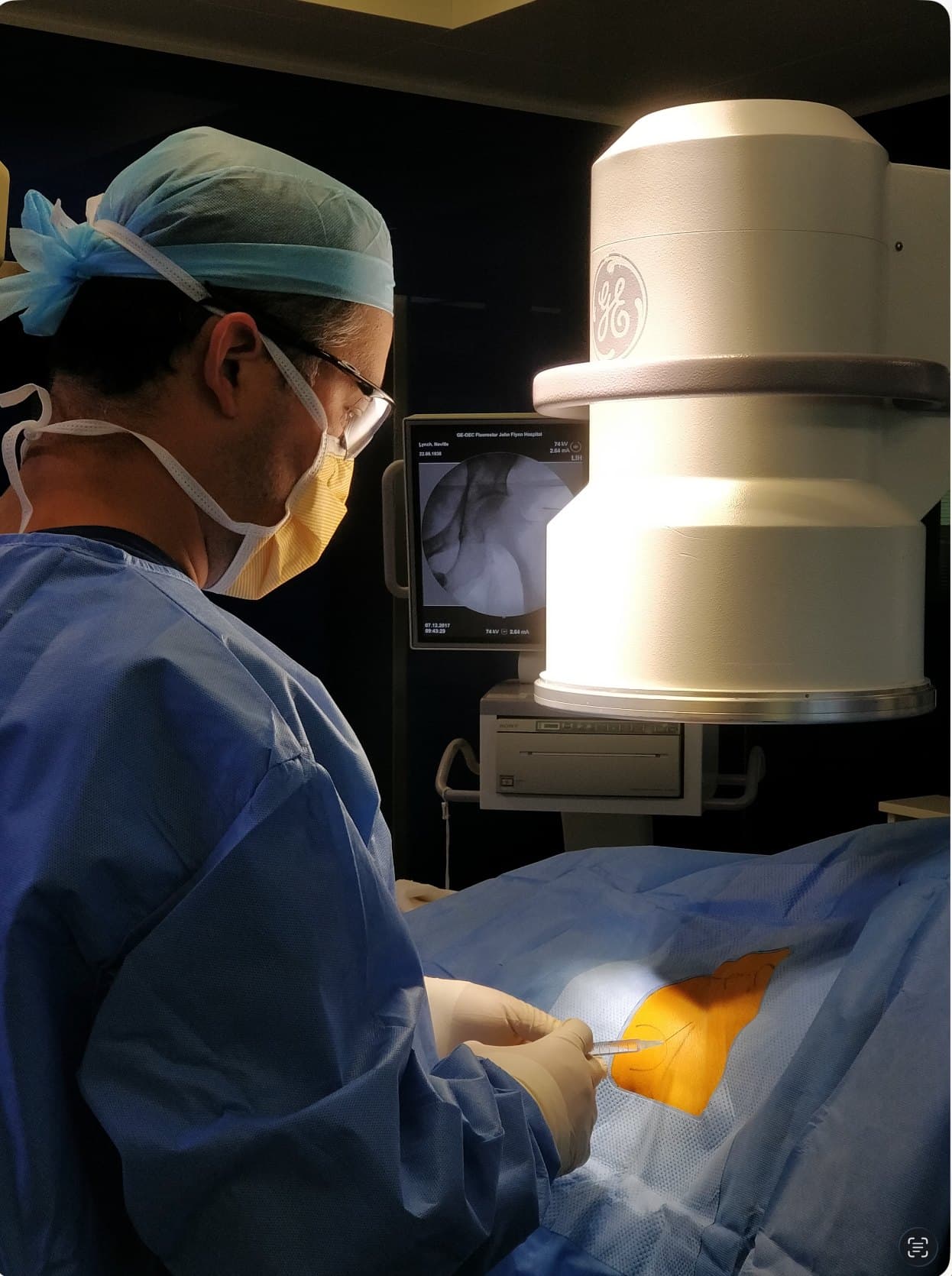
Corticosteroid injection. A corticosteroid (cortisone) injection delivers anti-inflammatory medication straight into the joint to settle pain and swelling. It's the most familiar of the joint injections, and it can help calm a flare or get you through a particular event while other treatments take effect. In placebo-controlled trials it gives clear pain relief in the short term, usually over a few weeks, after which the benefit fades.⁸,⁹ Repeated injections aren't recommended: the relief is short-lived, and frequent use may speed up cartilage wear.¹⁰ It settles the symptoms rather than changing the arthritis. Dr Tsung will advise whether a cortisone injection is worth it in your situation.
Viscosupplement injection (hyaluronic acid). Viscosupplementation injects hyaluronic acid, a substance found naturally in joint fluid, to improve lubrication and reduce pain. Dr Tsung uses a single-dose, high-molecular-weight preparation, given as one injection rather than the three weekly injections that older low-molecular-weight products require.¹¹ In randomised trials, a single high-molecular-weight injection gives modest but worthwhile improvements in pain and function compared with a dummy injection, mostly in early to moderate arthritis.¹²,¹³ Results vary, and not every trial shows a clear benefit,¹⁴ so it helps some people more than others. It's well tolerated, and reactions at the injection site are uncommon.¹²,¹³ Treatment guidelines differ on it: some advise against routine use, while others support it for selected patients.¹⁵,¹⁶ It manages symptoms rather than reversing the arthritis, and the effect isn't permanent. Dr Tsung offers it for selected patients, and will give you a straight view on whether it's worth trying for your knee.
Platelet-rich plasma (PRP) injection. PRP uses a small sample of your own blood, spun to concentrate the platelets, which is then injected into the joint. The concentrated growth factors are intended to reduce inflammation and ease pain. Studies show PRP improves function, and reduces pain over three to six months, compared with a dummy injection, with better results from more concentrated preparations.¹⁷ The evidence isn't settled: a large Australian trial using a lower-concentration preparation found no benefit over placebo.¹⁸ It treats symptoms rather than the arthritis itself, and results vary from person to person. A course is usually two or three injections over a few weeks.
Genicular nerve ablation. This targets the small nerves that carry pain signals from the knee, using heat (radiofrequency) to interrupt them. It's an option for people with moderate to severe knee arthritis whose pain hasn't settled with other treatments, or who aren't suitable for surgery. Of these four options, it has the strongest evidence when tested against a dummy (sham) procedure: trials show meaningful pain relief and improved function for about six months,¹⁹,²⁰ and around half to two-thirds of people keep at least half of their pain relief for six to twelve months.²¹ It treats the pain, not the arthritis, and the nerves can recover over time. Dr Tsung performs this procedure for selected patients.
A note on hip arthritis
For hip arthritis, management centres on the first-line measures above, with joint replacement considered when those stop working. Injection options are more limited for the hip and are discussed case by case.
When surgery becomes an option
If arthritis is advanced and these measures no longer control the pain, joint replacement may be worth considering. It isn't automatic, and the decision is yours. When it's the right step, hip replacement and knee replacement, including partial knee replacement and robotic-assisted options, give most people substantial, lasting relief. Dr Tsung will talk you through whether you're at that point. More on how the decision is made.
What to expect
These treatments manage the symptoms of arthritis. None cures it, the injections carry small risks your specialist will explain, and results vary between individuals.
Common questions
Can hip and knee arthritis be managed without surgery?
For many people, yes. Most hip and knee arthritis can be managed for years without surgery, and that is where treatment should start. The combination with the strongest evidence is exercise and physiotherapy, weight management if you carry extra weight, and simple pain relief such as anti-inflammatory gels for the knee. These work best together rather than as any single measure, and surgery is considered only when they stop giving enough relief.
Do cortisone injections help knee arthritis?
A cortisone injection can settle pain and swelling and help calm a flare. In placebo-controlled trials the relief is clear but short-term, usually over a few weeks, after which it fades. Repeated injections are not recommended, because the relief is short-lived and frequent use may speed up cartilage wear. It settles the symptoms rather than changing the arthritis, and Dr Tsung will advise whether it is worth it in your situation.
Is a viscosupplement or PRP injection worth trying?
Both can give modest, variable relief for knee arthritis, and they manage symptoms rather than reversing it. A single high-molecular-weight viscosupplement injection gives modest improvements in pain and function for some people, mostly in early to moderate arthritis. PRP can improve pain and function over three to six months, though the evidence is not settled and a large Australian trial found no benefit. Results vary from person to person, and Dr Tsung will give you a straight view on whether either is worth trying.
What is genicular nerve ablation?
Genicular nerve ablation uses heat (radiofrequency) to interrupt the small nerves that carry pain signals from the knee. It is an option for moderate to severe knee arthritis when pain has not settled with other treatments, or when surgery is not suitable. Of the injection and ablation options it has the strongest evidence against a sham procedure, with meaningful relief for about six months. It treats the pain rather than the arthritis, and the nerves can recover over time. Dr Tsung performs this for selected patients.
When should I consider a joint replacement?
Joint replacement is worth considering when arthritis is advanced and first-line measures no longer control the pain. It is not automatic, and the decision is yours. When it is the right step, hip and knee replacement gives most people substantial, lasting relief, and Dr Tsung will talk you through whether you are at that point. More on how the decision is made.
Book or refer
To see Dr Tsung you’ll need a referral from your GP or another specialist. Call reception on (07) 5676 9930 to book your first appointment, or email hello@sgco.au. New patients can pre-register online before the visit; the form prepares your records and does not book an appointment. For costs, see fees and health funds.
References
- Fransen M, McConnell S, Harmer AR, Van der Esch M, Simic M, Bennell KL. Exercise for osteoarthritis of the knee. Cochrane Database of Systematic Reviews. 2015;(1):CD004376.
- Bartels EM, Juhl CB, Christensen R, et al. Aquatic exercise for the treatment of knee and hip osteoarthritis. Cochrane Database of Systematic Reviews. 2016;(3):CD005523.
- Messier SP, Mihalko SL, Legault C, et al. Effects of intensive diet and exercise on knee joint loads, inflammation, and clinical outcomes in overweight and obese adults with knee osteoarthritis: the IDEA randomised clinical trial. JAMA. 2013;310(12):1263–1273.
- Derry S, Conaghan P, Da Silva JAP, Wiffen PJ, Moore RA. Topical NSAIDs for chronic musculoskeletal pain in adults. Cochrane Database of Systematic Reviews. 2016;(4):CD007400.
- Royal Australian College of General Practitioners. Guideline for the management of knee and hip osteoarthritis. 2nd ed. RACGP; 2018.
- da Costa BR, Reichenbach S, Keller N, et al. Effectiveness of non-steroidal anti-inflammatory drugs for the treatment of pain in knee and hip osteoarthritis: a network meta-analysis. Lancet. 2017;390(10090):e21–e33.
- Osani MC, Bannuru RR. Efficacy and safety of duloxetine in osteoarthritis: a systematic review and meta-analysis. Korean Journal of Internal Medicine. 2019;34(5):966–973.
- Jüni P, Hari R, Rutjes AWS, et al. Intra-articular corticosteroid for knee osteoarthritis. Cochrane Database of Systematic Reviews. 2015;(10):CD005328.
- Bensa A, Sangiorgio A, Deabate L, et al. Intra-articular corticosteroid injections provide a clinically relevant benefit compared to placebo only at short-term follow-up in patients with knee osteoarthritis: a systematic review and meta-analysis. Knee Surgery, Sports Traumatology, Arthroscopy. 2024;32(4):871–884.
- McAlindon TE, LaValley MP, Harvey WF, et al. Effect of intra-articular triamcinolone vs saline on knee cartilage volume and pain in patients with knee osteoarthritis: a randomised clinical trial. JAMA. 2017;317(19):1967–1975.
- Bahrami M, et al. Efficacy of single high-molecular-weight versus triple low-molecular-weight hyaluronic acid intra-articular injection among knee osteoarthritis patients. BMC Musculoskeletal Disorders. 2020;21.
- Petterson SC, Plancher KD. Single intra-articular injection of lightly cross-linked hyaluronic acid reduces knee pain in symptomatic knee osteoarthritis: a multicentre, double-blind, randomised, placebo-controlled trial. Knee Surgery, Sports Traumatology, Arthroscopy. 2019;27:1992–2002.
- Migliore A, et al. Knee osteoarthritis pain management with an innovative high and low molecular weight hyaluronic acid formulation (HA-HL): a randomised clinical trial. Rheumatology and Therapy. 2021;8:1617–1636.
- Altman RD, et al. Efficacy and safety of a single intra-articular injection of non-animal stabilised hyaluronic acid (NASHA) in patients with osteoarthritis of the knee. Osteoarthritis and Cartilage. 2004;12:642–649.
- Australian Commission on Safety and Quality in Health Care. Osteoarthritis of the Knee Clinical Care Standard. 2024.
- Bannuru RR, et al. OARSI guidelines for the non-surgical management of knee, hip, and polyarticular osteoarthritis. Osteoarthritis and Cartilage. 2019;27:1578–1589.
- Bensa A, et al. PRP injections for the treatment of knee osteoarthritis: the improvement is clinically significant and influenced by platelet concentration. American Journal of Sports Medicine. 2025;53:745–754.
- Bennell KL, et al. Effect of intra-articular platelet-rich plasma vs placebo injection on pain and medial tibial cartilage volume in knee osteoarthritis: the RESTORE randomised clinical trial. JAMA. 2021;326(20):2021–2030.
- Barreto RB, et al. Efficacy and safety of genicular nerve ablation techniques for knee osteoarthritis: a systematic review and meta-analysis of sham-controlled randomised trials. Pain Medicine. 2025.
- Kwon HJ, et al. Effectiveness of cooled radiofrequency ablation of genicular nerves in patients with chronic knee pain due to osteoarthritis: a double-blind, randomised, controlled study. Medicina. 2024;60:857.
- Kanjanapanang N, et al. Effectiveness of genicular nerve radiofrequency ablation in osteoarthritis and post-surgical knee pain: a systematic review. Pain Medicine. 2025.