
Hip replacement Gold Coast
Hip replacement on the Gold Coast replaces the worn surfaces of an arthritic hip with an artificial joint. Dr Jason Tsung consults at Southern Gold Coast Orthopaedics in the John Flynn Medical Centre, Tugun, and performs hip replacement at John Flynn Private Hospital. Surgery is considered after non-surgical care has stopped helping, and is planned with robotic-assisted imaging and, for many suitable patients, the direct superior approach.
Written and reviewed by Dr Jason Tsung, FRACS (Orth) · Last reviewed July 2026
Which hip replacement approach does Dr Tsung use?
Dr Tsung commonly uses the direct superior approach for hip replacement, a muscle-sparing modification of the posterior approach. It is used with robotic-assisted planning in many suitable cases; the detailed explanation is on the direct superior approach resource page.
When is hip replacement considered?
Hip replacement is usually considered when arthritis pain no longer responds to non-surgical treatment, and when it interferes with walking, working, or sleep. It isn't the first step. Most hip arthritis is managed for a long time with physiotherapy, activity and weight management, and simple pain relief, and surgery is considered only when those stop giving enough relief. If you haven't worked through those options yet, start with hip and knee arthritis management. The decision to operate is yours to make with your surgeon.
What happens during a hip replacement?
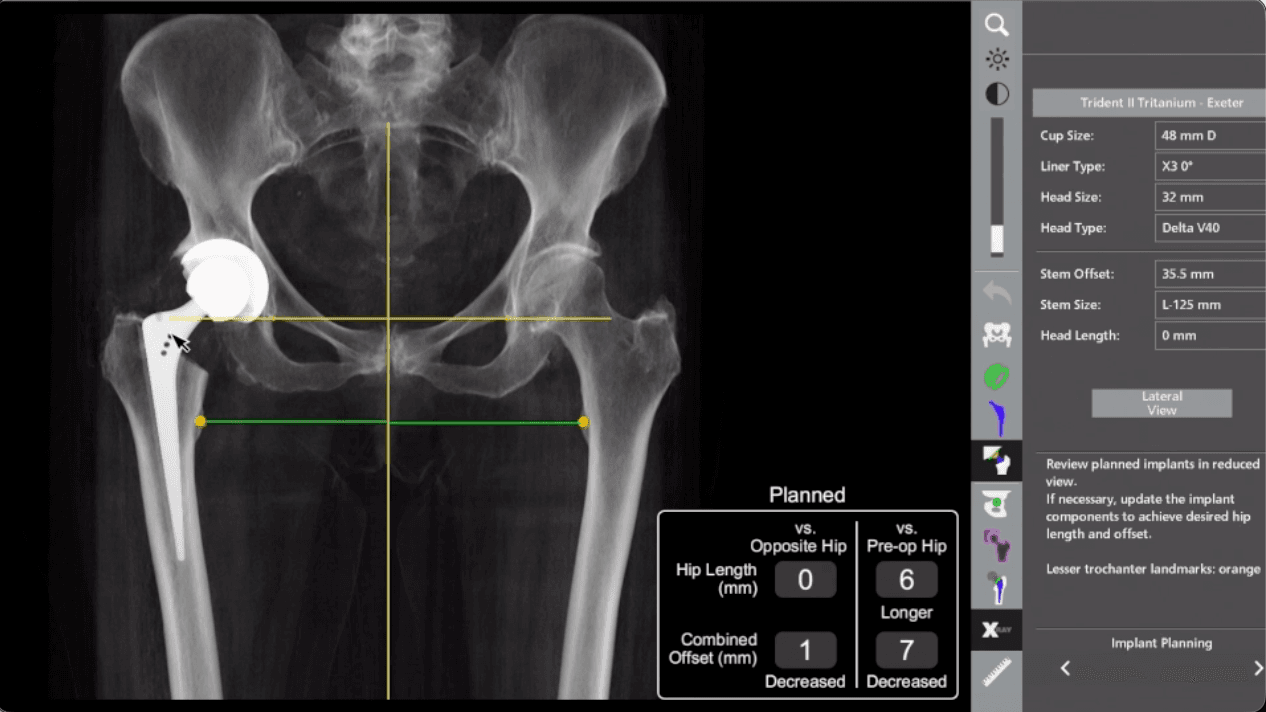
The hip is a ball-and-socket joint. In hip replacement, the worn ball at the top of the thighbone is removed and replaced with a smooth implant on a stem that sits inside the bone, and the worn socket is resurfaced with a cup and liner. Together these recreate a smooth, low-friction joint. The operation usually takes one to two hours, and most people stay in hospital for one to three days.
Where is hip replacement performed on the Gold Coast?
Dr Jason Tsung performs hip replacement at John Flynn Private Hospital in Tugun, on the southern Gold Coast. Southern Gold Coast Orthopaedics consults from the John Flynn Medical Centre (Suite 3B) next to the hospital, and your surgery and first days of recovery take place at the hospital itself.
What is the direct superior approach?
The direct superior approach is a minimally invasive modification of the standard posterior approach to the hip. It uses a smaller incision and leaves the iliotibial band, a strong band of tissue running down the outside of the thigh, and one of the deep muscles at the back of the hip (the quadratus femoris) intact, where a traditional posterior approach divides them. The aim is to reach the joint with less disruption to the surrounding tissues.
Sparing those structures appears to help the early part of recovery. Compared with the standard posterior approach, studies of the direct superior approach report a smaller incision, less blood loss during surgery, and a shorter hospital stay, by around half a day to a day.¹,² Patients tend to have lower pain and use fewer opioid painkillers in the first days after surgery,³ reach early movement milestones sooner,⁴,⁵ and are more likely to go straight home rather than to a rehabilitation facility.²
These advantages are concentrated in the first weeks. By three to twelve months, patient-reported outcomes are similar whether the hip was replaced through the direct superior approach or a standard approach,⁶ and complication rates, including the risk of dislocation, are comparable.⁷ The approach also isn't suitable for everyone. Complex hips, significant deformity, or previous surgery may call for a standard approach to keep the joint stable, and Dr Tsung will advise which approach suits your hip.
How is robotic assistance used in hip replacement?
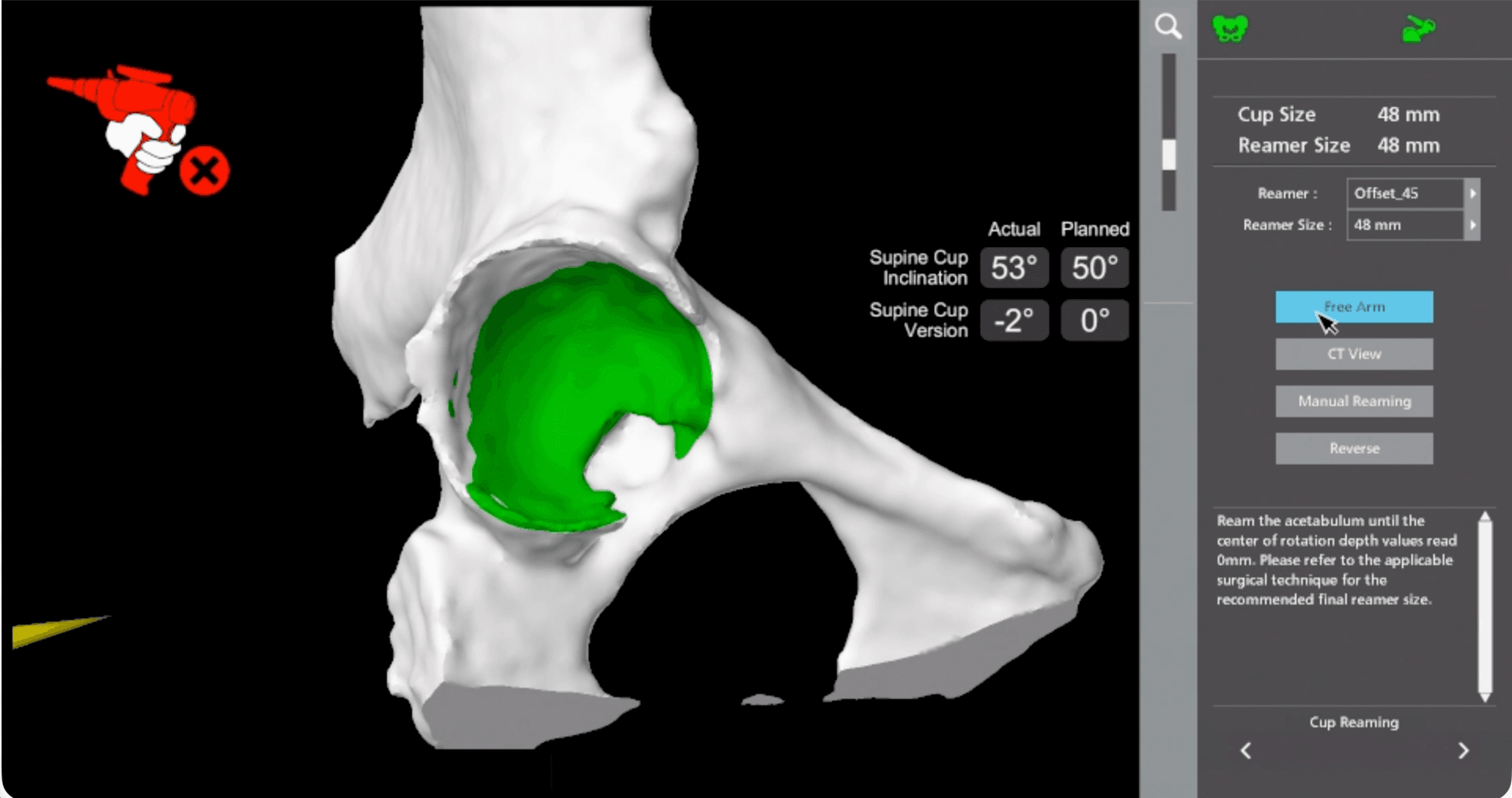
Dr Tsung uses the Stryker Mako robotic-arm system to plan and position the implant from a CT scan of your hip. In hip replacement, this helps place the socket accurately within the position surgeons aim for, which studies have placed within that target in around 95% of robotic cases compared with roughly 66% using conventional instruments.⁸ Accurate socket position is linked to a lower chance of dislocation. Robotic planning can be combined with the direct superior approach. More on robotic hip replacement and robotic-assisted joint replacement.
What is enhanced recovery?
Dr Tsung follows an enhanced recovery after surgery (ERAS) pathway. This combines modern pain control that reduces the need for strong painkillers, measures to limit bleeding and prevent blood clots, and getting you up and moving on the day of surgery. The aim is a smoother recovery and a shorter hospital stay. More on enhanced recovery after surgery.
What are the risks of hip replacement?
Hip replacement relieves pain and improves mobility for most people, and serious complications are uncommon. As with any major surgery, risks exist and are worth understanding. They include infection, blood clots in the leg or lung, dislocation of the new hip, a difference in leg length, loosening or wear of the implant over many years, nerve injury, fracture, and ongoing pain in a small number of cases. Dr Tsung will go through the risks that apply to your situation at your consultation. Individual results vary.
What is recovery like?
Most people are up and walking with aids on the day of surgery or the day after, move from crutches to a stick over the following weeks, and return to driving and desk work within several weeks. Full recovery continues over several months. Modern hip replacements are durable, and Australian registry data show that around 95% are still functioning at ten years.⁹ A more detailed week-by-week guide is on hip replacement recovery.
Common questions
Who performs hip replacement on the Gold Coast?
Dr Jason Tsung performs hip replacement at John Flynn Private Hospital in Tugun, on the southern Gold Coast. He consults from Southern Gold Coast Orthopaedics at the John Flynn Medical Centre. A referral from your GP or another specialist is needed for a Medicare rebate, and whether surgery is appropriate depends on your symptoms, imaging, health, goals and non-surgical options.
How long does a hip replacement last?
Most modern hip replacements are still working well ten years after surgery, and many last considerably longer. Australian registry data show that around 95% of hip replacements are still functioning at ten years. How long any individual hip lasts depends on factors like your age, weight, activity level and the implant used, and a small number need revision surgery over time.
Am I too young or too old for a hip replacement?
Age alone doesn't decide whether a hip replacement is right for you. What matters more is how much arthritis is affecting your pain, sleep and daily life, and whether non-surgical arthritis management has stopped helping. Younger patients may be more likely to need a revision later in life, and in older patients we consider general health and fitness for surgery. Dr Tsung assesses your situation and the decision is made together.
How soon will I be able to walk and drive after a hip replacement?
Most people are up and walking with aids on the day of surgery or the day after. We follow an enhanced recovery pathway to get you moving early. Over the following weeks you move from crutches to a walking stick, and most people return to driving and desk work within several weeks, once they can move safely and are off strong pain medication. Full recovery continues over several months, and there's a guide on hip replacement recovery.
What is the direct superior approach?
The direct superior approach is a minimally invasive, muscle-sparing modification of the standard posterior approach to the hip. It uses a smaller incision and leaves the iliotibial band and one of the deep muscles at the back of the hip intact, where the traditional approach divides them. Published studies suggest this can ease the first weeks of recovery, though results tend to even out over the following months and it isn't suitable for every hip. Dr Tsung advises which approach suits you.
What are the main risks of a hip replacement?
Hip replacement relieves pain and improves mobility for most people, and serious complications are uncommon, but like any major surgery it carries risks. These include infection, blood clots in the leg or lung, dislocation of the new hip, a difference in leg length, loosening or wear of the implant over many years, nerve injury and fracture, with ongoing pain in a small number of cases. Dr Tsung goes through the risks that apply to you at your consultation, and individual results vary.
Does Dr Tsung perform hip replacement at John Flynn Private Hospital in Tugun?
Yes. Dr Jason Tsung performs hip replacement at John Flynn Private Hospital in Tugun, on the southern Gold Coast. Southern Gold Coast Orthopaedics consults from the John Flynn Medical Centre (Suite 3B) next to the hospital, and hip replacement surgery and the initial inpatient recovery take place at the hospital.
Book or refer
To see Dr Tsung you’ll need a referral from your GP or another specialist. Call reception on (07) 5676 9930 to book your first appointment, or email hello@sgco.au. New patients can pre-register online before the visit; the form prepares your records and does not book an appointment. For costs, see fees and health funds.
References
- Zhang Z, et al. The efficacy and safety of the direct superior approach (DSA) for total hip arthroplasty: a systematic review and meta-analysis. Journal of Orthopaedic Surgery and Research. 2023;18.
- Shin K, et al. Early postoperative outcomes of the direct superior approach versus the posterior approach in total hip arthroplasty: a systematic review and meta-analysis. Journal of Clinical Medicine. 2024;13.
- Hong S, et al. Postoperative patient-reported pain and opioid consumption after total hip arthroplasty: a comparison of the direct superior and posterior approaches. Journal of Clinical Medicine. 2025;14.
- Miyamoto M, et al. Direct superior approach versus posterior approach in primary total hip arthroplasty: a systematic review and meta-analysis. Hip International. 2026.
- Kenanidis E, et al. Earlier functional recovery and discharge from hospital for THA patients operated on via the direct superior compared to the standard posterior approach. Hip International. 2022;33:620–627.
- Van Dooren B, et al. No clinically relevant difference in patient-reported outcomes between the direct superior approach and the posterolateral or anterior approach for primary total hip arthroplasty: analysis of 37,976 primary hip arthroplasties in the Dutch Arthroplasty Registry. Acta Orthopaedica. 2023;94:543–549.
- Van Dooren B, et al. The direct superior approach in total hip arthroplasty. JBJS Reviews. 2024;12.
- Loke RWK, et al. MAKO robotic-assisted compared to conventional total hip arthroplasty for hip osteoarthritis: a systematic review and meta-analysis. Journal of Orthopaedic Surgery and Research. 2025;20:466.
- Australian Orthopaedic Association National Joint Replacement Registry (AOANJRR). Hip, Knee & Shoulder Arthroplasty: 2025 Annual Report. Adelaide: AOA; 2025.